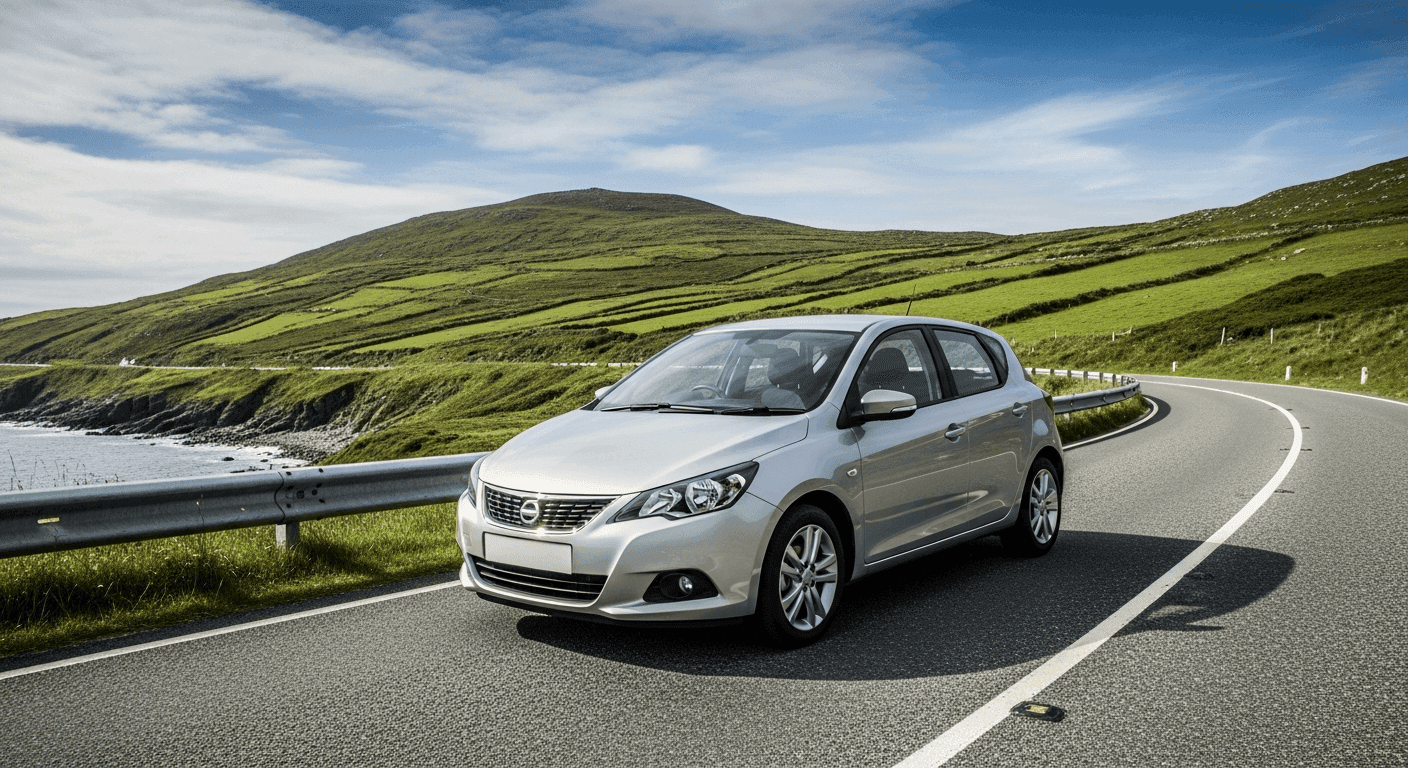
Economy Car Rentals with Europcar: Your Complete UK and Ireland Guide
Over 60% of UK and Ireland travelers prioritize cost savings when renting a vehicle, yet most still expect modern features and reliability. The challenge lies in finding that sweet spot where affordability doesn't mean sacrificing quality or contemporary technology. Europcar's economy car rental category represents something genuinely practical: compact, fuel-efficient vehicles built for navigating London's congested streets or Dublin's narrow lanes.
These aren't bare-bones rentals stripped of comfort—they're thoughtfully designed alternatives that deliver genuine value without premium pricing. You'll discover which economy models Europcar stocks, how fuel efficiency translates to real savings, and exactly when an economy car makes sense versus when to upgrade. This guide breaks down genuine trade-offs, current pricing strategies, and how hybrid options are reshaping what budget-friendly means in 2026.
Start your search for Europcar economy rentals today
The Economy Fleet Breakdown—What You're Actually Renting
Vehicle Models Commonly Available
Europcar stocks several reliable models within their economy range, including the Peugeot 207, Seat Ibiza, Renault Clio, Vauxhall Corsa, Volkswagen Golf, and Toyota Yaris. Each brings specific strengths to urban driving and regional exploration. The Peugeot 207 offers French engineering at an accessible price point, while the Seat Ibiza delivers Spanish practicality with solid build quality. The Renault Clio remains a favorite for its balance of efficiency and comfort, and the Vauxhall Corsa appeals to those seeking British familiarity. For drivers wanting slightly more refinement, the Volkswagen Golf provides German precision without economy-class compromises, and the Toyota Yaris brings Japanese reliability to the segment.
Transmission Options: Manual Versus Automatic
Europcar offers both manual and automatic transmissions across their economy fleet, with availability varying by location and season. Manual transmission remains the standard option and typically carries lower rental costs, but automatic availability has expanded considerably for those prioritizing convenience. For drivers unfamiliar with UK left-hand driving or navigating Ireland's narrow country roads, automatic transmission reduces cognitive load and builds confidence in unfamiliar conditions. Manual transmissions deliver better fuel economy and give experienced drivers direct control, particularly valuable on winding coastal routes or Scottish Highlands terrain.
Fleet Modernization and Contemporary Technology
Europcar's strategy centers on keeping their fleet current, ensuring access to vehicles equipped with modern safety features and infotainment systems. Recent additions include touchscreen navigation integration, smartphone connectivity via Apple CarPlay and Android Auto, and advanced driver assistance systems. Rearview cameras have become standard across most models, significantly easing parking anxiety in tight UK and Ireland spaces. Blind-spot monitoring and lane-keeping assistance add an extra layer of safety without premium pricing, addressing genuine needs for unfamiliar drivers navigating unfamiliar roads.
Seating Capacity and Real-World Comfort
Economy vehicles accommodate five passengers in theory, but practical comfort depends heavily on journey length and passenger size. Two adults and three children travel comfortably on city breaks and regional day trips. Five adult passengers on a six-hour motorway journey, however, means cramped rear legroom and fatigue factors that shouldn't be dismissed. Rear seat comfort improves markedly on newer models with enhanced cushioning and adjustable headrests, making the difference between tolerable and genuinely uncomfortable on extended journeys.
Boot Space Specifications
Boot capacity typically accommodates one to two small suitcases comfortably, making economy rentals ideal for solo travelers and couples packing light. A family of four traveling for a week faces realistic luggage constraints—you'll want carry-on sized bags rather than full-sized checked luggage. Fold-down rear seats expand capacity when needed, though this reduces passenger comfort and eliminates the flexibility to carry both passengers and substantial cargo simultaneously.
Modern Tech Integration
Current economy models feature infotainment systems with voice control capabilities, real-time traffic updates, and weather integration. Navigation compatibility with smartphone platforms means you're not dependent on potentially outdated built-in GPS systems. Charging ports for phones and tablets have become standard, addressing the genuine need to maintain connectivity during longer journeys. Fuel consumption displays provide real-time feedback on driving efficiency, encouraging behaviors that maximize your fuel savings.
Fuel Efficiency and Running Cost Reality
Actual MPG Performance
Europcar's economy range delivers impressive fuel consumption figures across real-world driving conditions. The Vauxhall Corsa achieves approximately 48-55 MPG on mixed driving, while the Toyota Yaris matches or exceeds these figures. The Volkswagen Golf lands slightly lower at 45-50 MPG but compensates with superior comfort and refinement. Manual transmissions consistently outperform automatics by 5-10%, a meaningful difference over a week-long rental. Actual performance varies substantially based on driving style, road conditions, and traffic patterns—city driving reduces efficiency by 20-30% compared to motorway cruising.
Fuel Type Options
Petrol dominates Europcar's economy fleet, offering straightforward refueling at every service station across the UK and Ireland. Diesel options provide slightly better fuel economy (10-15% improvement) but carry higher fuel costs per liter, creating a complex calculation for shorter rentals. Hybrid and electric models are expanding within the economy category, offering genuine emissions reduction and, in many cases, superior cost-per-mile economics when factoring in lower fuel consumption or electricity rates.
Real-World Cost Calculations
A typical week-long rental in an economy petrol car across mixed UK driving—combining city navigation with some motorway travel—consumes approximately 35-40 liters of fuel. At current UK petrol prices, this translates to roughly £50-65 in fuel costs. Compare this to a mid-size vehicle consuming 20% more fuel, and you're looking at an additional £10-13 weekly spend. Over a fortnight, economy rental fuel efficiency generates genuine savings of £20-26, money better redirected toward experiences or accommodations.
Hybrid and Electric Advantages
Electric economy rentals consume approximately 0.15-0.20 kWh per mile, translating to roughly £2-3 in electricity costs for a 100-mile journey versus £6-8 for traditional petrol. Hybrid models reduce fuel consumption by 30-40% compared to conventional petrol vehicles while eliminating charging concerns. Ireland and the UK have expanded charging infrastructure significantly, with over 30,000 public charging points now available. Tax incentives in both nations favor electric rentals, and some areas offer congestion charge discounts for EV drivers.
Consumption Patterns by Driving Style
Urban stop-start driving—typical in London, Manchester, Dublin, and Edinburgh city centers—reduces fuel economy by 25-35% compared to steady motorway cruising. Aggressive acceleration and frequent braking in traffic substantially penalize efficiency, while smooth, anticipatory driving maximizes MPG. A renter who modulates speed smoothly and avoids rapid acceleration might improve economy car efficiency by 10-15% compared to impatient driving patterns. This behavioral element often exceeds the impact of choosing manual over automatic transmission.
Hidden Fuel Savings
Beyond raw MPG figures, economy rentals reduce overall costs through lower oil viscosity requirements, smaller fuel tank capacity (meaning fewer fill-ups and less standing around petrol stations), and reduced tire resistance. Insurance costs for economy vehicles run 15-25% lower than mid-range alternatives, a meaningful savings factor when calculating true rental expenses.
Pricing Strategy and When Economy Makes Financial Sense
Competitive Pricing Structure
Europcar's economy rates typically range from £25-40 daily during off-peak periods and £40-60 during peak summer travel. This positions them competitively against major competitors, though careful comparison shopping reveals occasional deals from smaller operators. Mid-range vehicles cost 40-60% more, while premium compact cars command 60-100% premiums. The entry-level economy tier represents genuine savings: a week-long economy rental costs £175-280 compared to £280-450 for mid-range alternatives.
Seasonal Pricing Variations
July, August, and Christmas holidays see peak pricing across all categories. Booking three to six weeks in advance during these periods secures better rates than last-minute bookings. May and September represent sweet spots—shoulder seasons with favorable pricing and excellent weather across both nations. January and February offer the lowest rates as demand plummets, making them attractive for flexible travelers willing to embrace colder conditions.
Deal Frequency and Promotional Opportunities
Europcar runs consistent promotions, particularly for advance bookings and loyalty members. Early-bird discounts of 15-25% apply to rentals booked six weeks or more ahead. Newsletter subscribers access exclusive deals roughly monthly. Corporate rates benefit business travelers with consistent 10-20% discounts. The loyalty program accumulates points toward free rental days, with frequent renters earning significant benefits within 2-3 years of regular use.
Hidden Charges and Pricing Transparency
Collection fees, vehicle delivery charges, and insurance options significantly impact final rental costs. Basic liability coverage is typically included, but comprehensive protection requires additional investment. Fuel policies deserve careful attention: prepaid fuel options work for predictable driving patterns, while pay-as-you-go suits those with uncertain itineraries. Airport collection carries premium charges (£15-30) compared to city center pickup locations. Young driver supplements (under 25) add £10-15 daily, a substantial consideration for travelers in that age range.
Comparison Scenarios
For a three-day city break focusing on London or Dublin exploration, economy rentals deliver maximum value—you're prioritizing maneuverability and parking convenience over comfort. For a two-week cross-country journey combining multiple regions, compact premium vehicles justify modest upgrades through enhanced comfort and technology. A 10-day mixed itinerary spanning motorway driving and city exploration represents the sweet spot for economy vehicles—long enough to appreciate fuel savings, short enough that comfort trade-offs remain acceptable.
Long-Term Rental Discounts
Weekly rates typically reduce daily costs by 15-20% compared to daily rental pricing. Monthly rates cut per-day expenses by an additional 20-30%. A four-week economy rental might cost £600-800 total versus £1,000-1,200 if booking daily. This scaling favors extended trips, relocation assistance, and sabbatical travels, creating genuinely compelling value propositions for longer rentals.
Urban Maneuverability and Parking Advantages
Compact Dimensions and City Navigation
Economy vehicles measure roughly 3.8-4.2 meters in length, allowing passage through narrow London side streets and Dublin's medieval laneways that challenge mid-size vehicles. The tight turning radius—typically 5.1-5.4 meters—transforms city navigation from frustrating to manageable. Roundabouts in urban centers, tight multi-story car park aisles, and narrow residential streets become navigable rather than anxiety-inducing. The psychological confidence boost from driving a compact vehicle shouldn't be underestimated, particularly for drivers unfamiliar with UK left-hand driving conventions.
Parking Accessibility
Parallel parking spaces designed for compact cars prove challenging for larger vehicles—economy vehicles access parking spots routinely unavailable to mid-size alternatives. Multi-story car parks with compact-designated floors offer better rates (often 20-30% cheaper) for economy vehicles. Street parking in city centers becomes feasible rather than requiring expensive paid lots. The practical reality: you'll spend less time circling for parking spots and less money on parking fees, adding genuine daily convenience beyond the initial rental savings.
Handling Characteristics
Light steering weight and responsive handling create driver confidence in unfamiliar environments. The direct steering ratio (typically 13-15:1) means minor wheel inputs translate to noticeable directional changes without overshooting. Modern economy vehicles feature improved suspension tuning, eliminating the harsh ride quality that plagued earlier generations. Grip levels remain adequate for normal driving, though spirited cornering at motorway speeds requires more driver finesse than premium vehicles offer.
Visibility and Reversing Ease
Elevated driving position compared to smaller city cars, combined with rearview cameras and reversing guidelines, substantially eases the reversing process. The shorter wheelbase means less distance between front and rear reference points, reducing the mental calculation required for accurate positioning. Modern vehicles provide 360-degree camera systems, displaying blind spots and pedestrian proximity on dashboard screens—genuine safety enhancements for unfamiliar drivers.
Traffic Flow Efficiency
Smaller vehicles accelerate more readily, aiding responsive participation in stop-start traffic patterns. This translates to fuel efficiency gains and reduced driver fatigue through less clutch work and gear changes. Lane-switching in congested motorway conditions proves less intimidating, encouraging smoother traffic participation and better safety outcomes through reduced aggressive maneuvers.
Pedestrian-Friendly Profile
Lower vehicle mass results in improved stopping distances and reduced injury severity in pedestrian collisions. The hood height position improves driver visibility of pedestrians and cyclists in immediately adjacent areas, addressing a genuine safety concern in busy city centers where blind spots create genuine hazards.
Find your ideal Europcar economy vehicle for navigating UK and Irish cities
Ideal Traveler Profiles and Trip Types
Solo Adventurers
Single travelers choosing economy rentals maximize flexibility and minimize costs simultaneously. A solo traveler can navigate unfamiliar cities confidently in a compact vehicle, park easily regardless of destination quality, and control fuel spending directly. The psychological benefit of driving a smaller vehicle when traveling alone shouldn't be dismissed—it feels manageable and reduces the intimidation factor of unfamiliar driving conventions or road systems.
Couples and Duos
Two-person journeys represent the ideal economy rental scenario. Front seat comfort exceeds expectations, rear seats remain unnecessary, and luggage requirements stay within practical limits. The companionable silence of side-by-side driving, combined with modern infotainment systems providing podcasts or music, creates travel ambiance superior to larger vehicles carrying excess capacity and empty seats. Fuel costs per person drop substantially compared to single travelers, making this genuinely economical.
Short-Term Visitors
Three to seven-day tourism-focused trips align perfectly with economy vehicle strengths. You're unlikely to drive more than 8-10 hours daily, luggage needs stay modest, and the cost savings allow budget redirection toward attractions and dining. Tourism boards across the UK and Ireland note that economy rentals encourage more frequent stops and regional exploration—renters avoid marathon driving days in vehicles they're not comfortable pushing hard.
Business Travelers
Professionals visiting multiple cities for meetings value economy vehicles' ease of navigation and parking near client offices. The modern technology including wireless charging and connectivity addresses professional requirements. Rental costs remain reasonable for corporate expense accounts, while maintaining the efficiency and professionalism clients expect. The lack of excess vehicle mass means cheaper insurance for business use, relevant for organizations carrying liability concerns.
Budget-Conscious Families
Small families with two children and minimal luggage find economy vehicles workable for week-long holidays focused on specific regions rather than extensive cross-country exploration. The cost differential compared to minivans or larger vehicles amounts to meaningful savings for budget-conscious families—money redirected toward child activities, attractions, and dining experiences. Seating configuration works adequately for children, particularly younger passengers who require less personal space.
Environmental Advocates
Eco-conscious renters increasingly prioritize Europcar's expanding hybrid and electric economy options. The emissions reduction aligns with personal values, while many find the driving experience superior—electric vehicles offer immediate torque response and silent operation, hybrid models eliminate anxiety about fuel economy. The expanding charging infrastructure across both nations removes practical barriers to EV rental adoption.
Genuine Limitations and When to Consider Alternatives
Passenger Comfort Constraints
Five adult passengers on a six-hour motorway journey creates realistic discomfort that shouldn't be minimized. Rear seat legroom rarely exceeds 29-31 inches, adequate for two-hour stints but problematic for extended driving. The cramped feeling intensifies for tall passengers or those with mobility considerations. If your journey involves five adults traveling 500+ miles, mid-size vehicles justify modest cost increases through genuine comfort improvements that impact journey satisfaction and safety through reduced driver distraction from discomfort complaints.
Luggage Space Restrictions
Groups traveling for two weeks struggle with economy boot space, even with rear seat folding. A couple with two large suitcases faces genuine packing constraints, while a family of four with appropriate holiday luggage runs into immediate limitations. If your trip involves significant baggage needs or you value flexibility around packing without elimination choices, this becomes a legitimate drawback justifying vehicle upgrades.
Larger Group Requirements
Six or more passengers require mid-size or larger vehicle categories entirely. Seven-seaters and larger vehicles become not merely preferable but mandatory for safety and regulatory compliance. Similarly, travelers needing to transport significant cargo—sports equipment, camping gear, or retail purchases—benefit from genuine capacity that economy vehicles simply don't provide.
Extended Road Trip Considerations
Multi-day, high-mileage journeys combining motorway driving with challenging terrain tax economy vehicles and driver patience. A 500-mile day split across seven hours of motorway driving tests rear passenger patience and forward visibility for extended periods. Driver fatigue increases in vehicles requiring more attention to maintain motorway cruising speeds, particularly on undulating terrain where gear management becomes more demanding.
Winter Driving Challenges
Scottish Highlands and Irish mountain regions present winter traction challenges for economy vehicles with limited ground clearance. While modern traction control mitigates many concerns, reduced weight distribution and smaller tire contact patches create genuine vulnerabilities on snow or ice. Winter journeys to these regions justify all-wheel-drive vehicle upgrades despite cost increases.
Towing Capacity
Economy vehicles carry towing limits of 750-1,200 kilograms, restricting options for travelers needing to transport trailers or boat tenders. This limitation warrants serious consideration if your itinerary involves towing requirements—exceeding manufacturer limits creates insurance complications and liability exposure.
Hybrid and Electric Evolution in Economy Rentals
Growing EV Availability
Europcar's electric vehicle availability within economy categories has expanded substantially, with models including the Nissan Leaf, BMW i3, and various Renault electric options now appearing in major UK and Irish cities. This expansion reflects shifting market demand and regulatory pressures around emissions reduction. By 2026, electric economy availability will likely match or exceed current hybrid representation.
Charging Infrastructure Across UK and Ireland
The UK operates approximately 22,000 public charging points, while Ireland maintains roughly 2,000 across the island. Major motorway service areas now feature rapid-charging infrastructure, addressing range anxiety on longer journeys. Urban areas offering comprehensive charging networks make EV rentals genuinely practical for city-focused trips. TripAdvisor and app-based systems provide real-time charger availability and type information, eliminating uncertainty around charging accessibility.
Range Anxiety Reality
Modern electric economy vehicles deliver 180-250 miles per charge, adequate for typical UK and Irish journeys. London to Manchester (around 220 miles) requires strategic charging stops but proves feasible. Dublin to Cork (approximately 160 miles) completes on a single charge comfortably. Range anxiety becomes less pressing than simple planning, locating charging points along your route rather than expecting range comparable to petrol vehicles.
Cost Comparison
Electric economy rentals cost 10-20% more than petrol equivalents, but electricity expenses run roughly 60-70% lower than fuel for comparable journeys. A 500-mile journey in a petrol economy car costs approximately £35-40 in fuel; an electric vehicle costs £12-15 in electricity. Weekly rental cost differences of £70-140 translate to electricity savings of £20-30, narrowing the gap to roughly £50-110 total cost premium for environmental benefit. For environmentally conscious renters, this premium represents genuine value alignment with personal values.
Environmental Impact Metrics
Electric vehicles produce zero direct emissions, reducing carbon footprint by 50-70% compared to petrol vehicles when considering UK grid electricity sources (increasingly renewable). Hybrid models reduce emissions by 30-40% through improved efficiency. Over a two-week rental, electric vehicles prevent approximately 1-1.5 tons of CO2 emissions compared to petrol alternatives—meaningful environmental contribution aligning with personal sustainability concerns.
Future-Proofing Your Rental
2026 EV technology addresses previous adoption barriers through improved reliability, faster charging speeds (15-20 minute rapid charges becoming standard), and expanded vehicle diversity. Battery technology improvements extend range while reducing costs, making electric economy vehicles increasingly competitive on price. Planning rental bookings with EV preferences now positions travelers to access increasingly sophisticated and cost-competitive electric options, avoiding outdated petrol vehicle patterns before transitioning ultimately to EV prevalence.
Booking Strategy and Insider Tips
Advance Booking Advantages
Booking three to six weeks ahead consistently yields 15-25% savings compared to last-minute reservations. Europcar allocates premium inventory to advance bookings, sometimes providing complimentary upgrades when lower-priced categories sell out. Early bookings also secure preferred collection times, avoiding peak periods when queues lengthen and processing delays accumulate.
Insurance Optimization
Basic third-party liability coverage typically includes, but comprehensive protection requires additional investment. Declining insurance while relying on personal credit card coverage creates risk exposure if damage occurs. Bundling multiple rentals with annual comprehensive policies sometimes costs less than per-rental protection. Business travelers benefit from corporate insurance policies that often provide better coverage and terms than individual rentals negotiated on-the-spot.
Fuel Policy Selection
Prepaid fuel options work well for predictable driving patterns where you estimate fuel consumption accurately. Pay-as-you-go approaches suit uncertain itineraries where driving distances vary. Returning vehicles on empty to avoid overpaying for unused fuel introduces risk—you pay premium per-liter rates if you don't complete refueling in time. Mid-point between these approaches involves filling the vehicle yourself before return, avoiding both prepaid premium charges and last-minute gas station overpayments.
Loyalty Program Leverage
Frequent renters accumulate points creating free rental days within 12-18 months. Elite tier membership provides complimentary upgrades, free satellite navigation system usage, and priority customer service access. If you rent multiple times yearly, enrollment investment pays dividends quickly through accumulated benefits that substantially reduce future rental costs.
Upgrade Negotiation Tactics
If mid-range vehicles are available during pickup and similar pricing applies, politely inquiring about complimentary upgrades sometimes succeeds, particularly during off-peak periods when fleet sits underutilized. Loyalty members and frequent renters receive higher upgrade priority. Accepting offered upgrades gracefully builds relationships with Europcar staff, sometimes resulting in future booking advantages. Never demand or pressure upgrades—collaborative approaches work better than aggressive negotiation.
Collection Process Optimization
Arriving with reservation confirmations, valid driver's license, and insurance documentation streamlines processing. Pre-registration online eliminates paperwork delays. Understanding fuel policies, insurance selections, and damage documentation processes before arrival prevents complications. Photographing vehicle condition at pickup, noting existing damage, prevents disputes over responsibility. Clear communication with collection staff regarding route planning and vehicle feature orientation ensures you leave with complete confidence and zero confusion.
The Smart Renter's Takeaway
Europcar's economy car rental category represents more than just the cheapest option—it's genuinely the right choice for specific travel scenarios. The combination of competitive pricing, exceptional fuel efficiency, and urban maneuverability creates real value extending far beyond the initial rental quote. You're getting modern vehicles with contemporary technology, not outdated clunkers.
The hybrid and electric expansion is reshaping what economy rentals mean in 2026, offering environmentally conscious travelers a legitimate path to reduced emissions without premium pricing. Yes, you'll encounter trade-offs with passenger comfort on marathon journeys and luggage space for large groups, but understanding these limitations upfront prevents disappointment.
Start your next UK or Ireland adventure with eyes wide open: assess your actual needs against economy vehicle strengths, explore Europcar's current fleet and pricing, and book strategically to maximize savings. The money you save on rental costs and fuel efficiency? Redirect it toward experiences and memories that actually matter during your travels.
Book your Europcar economy rental and discover smart travel for your UK and Ireland journey