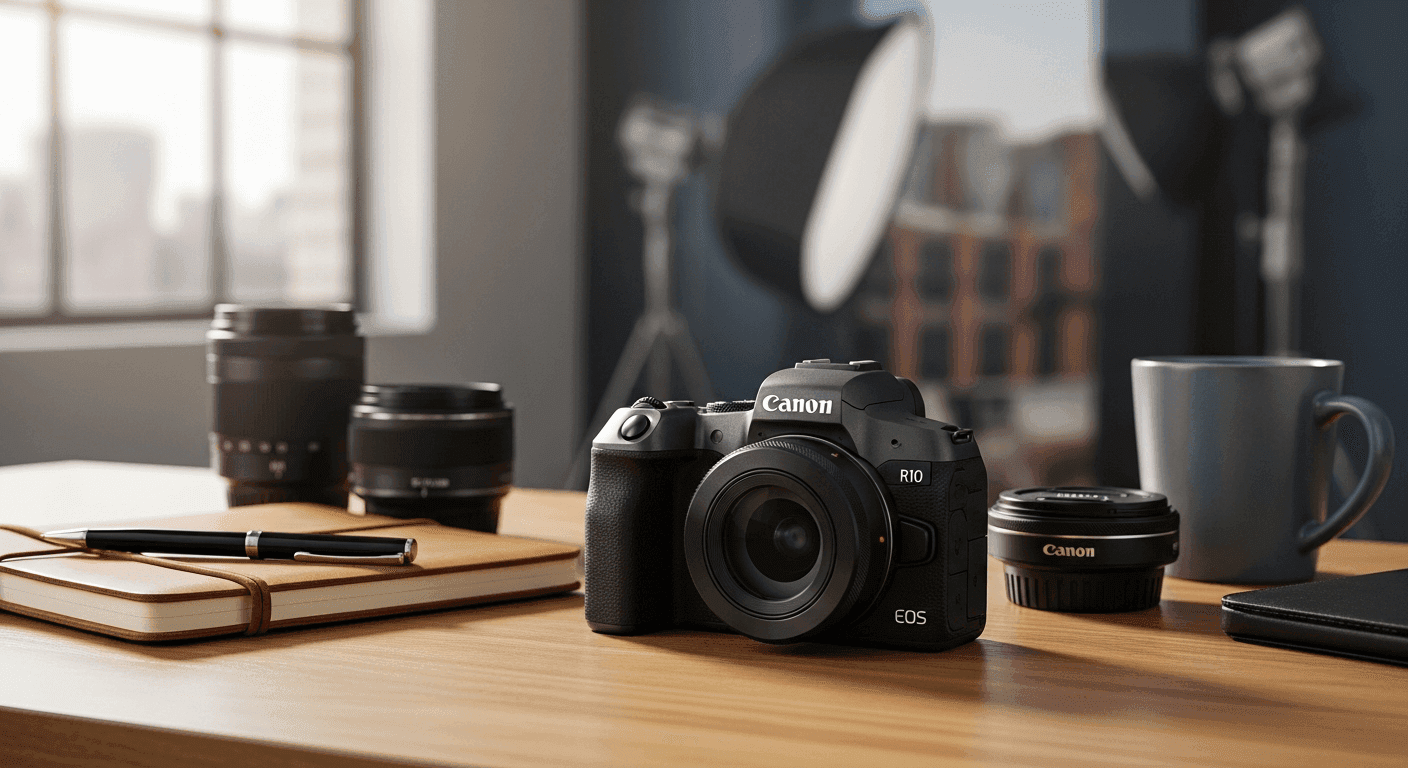
Content creators are abandoning expensive cinema cameras and switching to mirrorless systems—but justifying a $3,000+ body purchase remains a tough sell. The Canon EOS R10 has become the preferred choice for YouTubers, vloggers, and social media creators who demand advanced features without the premium price tag. Canon's RF mirrorless system built its reputation on exceptional autofocus and video performance, yet those capabilities stayed locked behind walls of expense until the EOS R10 arrived.
This camera transplants intelligent subject tracking and rapid-fire shooting speeds from flagship models into a lightweight, vari-angle design engineered for creators who move constantly, travel frequently, and shoot in unpredictable conditions. The EOS R10 brings advanced autofocus that tracks moving subjects without hunting, flexible 4K video capabilities, and a game-changing articulating touchscreen that transforms awkward angles into creative opportunities.
Explore the Canon EOS R10 at Camera House today.
You'll also uncover where this camera shows real limitations—battery life, stabilization, and lens availability—so you can make an informed investment decision before committing your money.
Why Content Creators Are Choosing the EOS R10 Over Expensive Alternatives
The EOS R10 delivers flagship autofocus at entry-level pricing through its Dual Pixel CMOS AF II system, which provides class-leading subject recognition and tracking inherited from Canon's premium models. This performance advantage alone would justify upgrading, yet the camera adds numerous other advantages creators actually use daily.
Compact form factor matters enormously for on-the-go shooting. At 429g with a card and battery, the EOS R10 sits light enough for all-day handheld work and travel vlogging without shoulder fatigue. The 3-inch vari-angle LCD screen flips and rotates for selfie shots and creative framing that fixed screens simply cannot match. Professional-grade autofocus typically requires professional-grade pricing, yet the EOS R10 delivers tracking performance comparable to cameras costing 2-3 times more.
Ergonomics and intuitive interface design reduce the learning curve for creators transitioning from smartphones or basic DSLRs. The menu system feels logical rather than frustrating, and physical controls sit within natural reach during handheld operation.
4K Video Performance and Slow-Motion Capabilities for Production Work
The EOS R10 handles video demands that would choke entry-level cameras. UHD 4K recording at 60fps with crop mode captures fast-paced action with genuinely smooth motion, while oversampled 4K at 30fps draws from 6K sensor data to deliver enhanced sharpness for cinematic footage.
Full HD 120fps slow-motion recording unlocks creative effects for dramatic reveals and action sequences that feel polished rather than amateur. Flexible frame rate options support 24p, 25p, 30p, and 60p for broadcast-standard delivery across platforms and distribution channels.
The DIGIC X processor handles demanding video encoding without overheating during extended sessions—a critical advantage for travel creators who can't pause for camera thermal recovery. Log-like color science provides adequate flexibility for post-production color grading and correction, enabling you to match footage across multiple cameras if needed.
Shop Canon EOS R10 video bundles at Camera House.
Autofocus Tracking That Keeps Up With Your Subjects
Real-time subject detection recognizes and locks onto people, animals, and vehicles automatically without manual intervention. Eye and face detection maintains focus on talent's eyes during interviews and dialogue-heavy scenes, keeping viewers locked on your subject rather than watching soft focus drift.
Animal tracking capability follows pets and wildlife with minimal focus breathing or hunting—a massive advantage for nature and pet content creators. Continuous autofocus during video provides smooth focus transitions that don't distract viewers, and touch-to-focus functionality allows tapping the articulating screen to shift focus mid-shot during handheld work.
Focus peaking and magnification tools assist manual focus work when precision becomes critical, giving you fallback options when automated tracking needs human judgment.
Where the EOS R10 Falls Short for Demanding Creators
The absence of in-body image stabilization (IBIS) remains the most significant limitation. The camera relies instead on in-lens stabilization or digital stabilization, both inferior to true IBIS for handheld work. Lens stabilization dependency means purchasing RF-S or RF lenses with optical stabilization rather than stabilizing any lens you attach.
Battery life provides approximately 250-300 shots per charge, requiring spare batteries for intensive shooting days. Higher ISO noise performance shows noticeable grain at ISO 3200 and above compared to full-frame cameras with larger sensors, a real constraint in dim lighting situations.
The RF-S lens ecosystem remains smaller than Canon's established EF/EF-S lineup, though full-frame RF lens compatibility and third-party support from Tamron and Sigma help bridge the gap. Thermal limitations during extended 4K recording may throttle performance in warm environments, particularly during back-to-back takes.
Lens Ecosystem and Compatibility for Video Work
The RF-S lineup includes the 18-45mm kit lens and 18-150mm versatile zoom designed specifically for creators. Full-frame RF lens compatibility provides access to Canon's premium collection, expanding your options significantly beyond the native RF-S offerings.
EF/EF-S lens adaptation allows using existing Canon DSLR lenses with affordable adapters, protecting past investments in glass. Third-party RF mount support from Tamron and Sigma continues expanding affordable alternatives and specialized options.
Compact telephoto options like the RF 70-200mm enable long-range subject tracking without excessive bulk, while wide-angle alternatives support environmental storytelling and immersive framing for videos.
Pricing Breakdown and Kit Value Comparison
The body-only configuration at $979-$999 works perfectly for creators with existing lens collections. The 18-45mm kit option at $1,099-$1,149 provides the ideal entry point for beginners assembling their first mirrorless system.
The 18-150mm kit option at $1,379-$1,449 offers all-in-one versatility for travel content creation without lens-swapping logistics. The overall value proposition delivers flagship autofocus and video features at 40-50% less than competitors.
Long-term investment potential ensures future-proofing through RF lens compatibility and ecosystem growth as Canon continues expanding the mount. Comparison to smartphone gimbal setups shows the EOS R10 costs less while offering demonstrably superior image quality, dynamic range, and creative control.
The Bottom Line for Content Creators and Vloggers
The Canon EOS R10 represents a watershed moment in affordable mirrorless technology. You're acquiring autofocus performance and video capabilities that would've required a $2,500+ investment just two years ago, wrapped in a body light enough to carry all day without shoulder strain. The articulating screen alone justifies the purchase for vloggers exhausted by awkward angles and external monitor setups.
Stabilization and battery life remain genuine limitations requiring realistic planning. Shooting handheld in dim lighting or planning 12-hour production days means budgeting for stabilized lenses and extra batteries. The RF-S lens ecosystem is still maturing, though Canon's full-frame RF collection and third-party support are filling gaps quickly.
For YouTubers, TikTok creators, travel vloggers, and small production teams operating on realistic budgets, the EOS R10 delivers exceptional value. It's the camera that lets you focus on storytelling rather than wrestling with technology—and that's worth far more than the price difference.
Begin your content creation journey with the Canon EOS R10 at Camera House.